


October 8, 2026
Prioritse Sharing - our consultation response to the Senedd
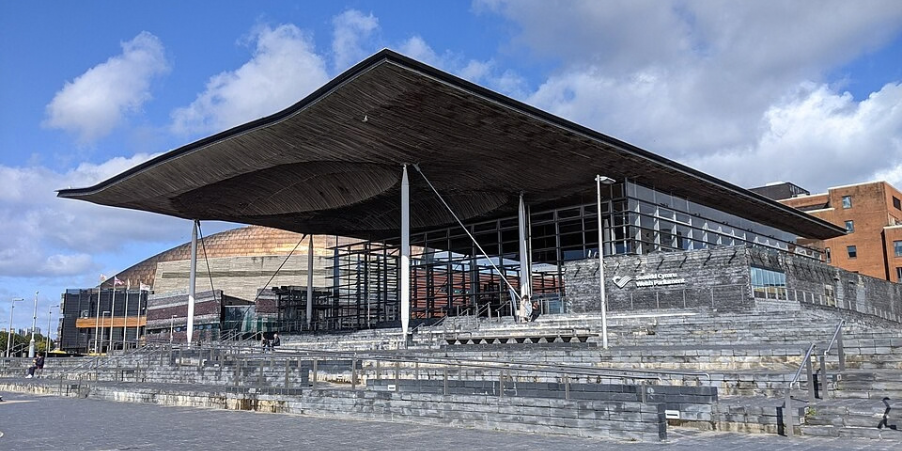
The Senedd Climate Change, Environment, Sustainability and Rural Affairs Committee were recently asking for consultation responses on what they should prioritise over the upcoming Senedd term. We reached out to our Wales-wide network and brought together a response to represent Libraries of Things and the sharing economy more generally. Read on below.
Main Priorities
This response is submitted on behalf of Benthyg Cymru and its network of Libraries of Things; we asked our network directly for their views, and what follows combines their responses with our own analysis.
Consumption is at the root of the environmental crises this Committee exists to address. The planetary boundaries framework, the scientific basis for describing a safe operating space for humanity, shows resource extraction and material consumption are key drivers of the environmental limits we are currently exceeding, including climate change. Wales' own global footprint is more than double its estimated biocapacity: if the global population consumed at the rate Wales does, we would need 2.08 Earths. For most manufactured goods, the majority of environmental impact happens before an item is ever used, in extraction, processing, manufacture and transport. A six-city European household survey published this year (Digital Kiosks project, Interreg North Sea Region, July 2026) found that below-median-income households had 39% lower odds of owning surveyed household products than above-median-income households, evidence this is an equity issue as well as an environmental one.
Sharing and Libraries of Things offer a direct, practical way to reduce consumption at community scale, without reducing quality of life. Every item borrowed rather than bought avoids its embedded environmental impact entirely, not only the impact of its eventual disposal. This is why prevention and reuse sit above recycling in the waste hierarchy: recycling manages waste after it exists, borrowing prevents it being created in the first place. Benthyg Cymru's own network illustrates the scale achievable even from a small, underfunded network: 34,564 items borrowed to date, an estimated 376,447 kg of carbon saved, and £809,339 saved for households. (Sept 2026)
Despite this, reuse, repair and circular economy delivery infrastructure has not been treated as a Senedd priority. The outgoing Climate Change, Environment, and Infrastructure Committee ran a dedicated inquiry into waste in 2024, examining Welsh Government's circular economy strategy, Beyond Recycling. Despite this, its Sixth Senedd legacy report sets out eleven suggested priority areas for the incoming committee, and reuse, repair, and circular economy delivery infrastructure do not appear among them.
We would ask the Seventh Senedd's Climate Change, Environment, Sustainability and Rural Affairs Committee to close this gap explicitly, and to treat consumption, and the sharing and reuse infrastructure that reduces it, as a main priority for this Senedd term. Wales already has genuine strengths to build on: a national Library of Things network, an established repair café movement, and government strategies like Beyond Recycling that already point this direction. What is missing is not evidence or public appetite, but Committee-level recognition that reducing consumption through sharing and reuse deserves the same priority status as recycling and other established levers, backed by funding that matches a delivery infrastructure role rather than a community amenity.
FIrst Priority
Treat borrowing as a core service, not a short-term project.
Benthyg Cymru is Wales's national Library of Things network, set up in 2017 and established as a Community Interest Company in 2020. The network spans 36 (and counting) community-run Libraries of Things, supporting 7 direct and 42 indirect jobs and 142 volunteers. Since 2017, it has facilitated 34,564 borrows, saving households an estimated £809,339 and preventing 376,447 kg of carbon emissions.
Wales is often held up as one of the best-supported countries in the world for sharing schemes, yet that has not translated into a sustainable model. Success comes down to staff time more than who runs a site: the best-performing sites get the most support, but that cost falls in full on sites without a larger host to absorb it. Benthyg achieves a great deal with very little, but the funding landscape is the most difficult it has ever been.
Sites embedded in larger host projects are safer, but conditionally: a Library of Things is rarely a host's core purpose, so it's often the first activity cut when budgets tighten. We have seen large sites close for exactly this reason, not lack of demand. There is no single right delivery model: some sites are community-led, others embedded in public services, and funding should support both.
Rural delivery also deserves attention: our network includes the Carmarthenshire Machine Ring, led by Social Farms & Gardens, lending agricultural equipment to small growers, part of Wales's wider rural equipment-sharing tradition.
Current funding largely arrives as short-term, project-based grants, which suits pilots, not the multi-year timescale needed to embed a habit like borrowing instead of buying. Welsh Government's own evaluation of the Circular Economy Fund (November 2025) confirms funding network organisations is more effective than funding hubs individually: investment in networks including Benthyg Cymru “enabled the Welsh Government to reach more communities indirectly than would have been possible through direct grant funding alone,” helping Wales surpass its target of 80 repair and reuse hubs. We would ask the Committee to examine why funding remains short-term given this evidence, and to consider core, multi-year funding routes for national network organisations like Benthyg Cymru specifically.
One solution would be for such funding to be administered by a body like Benthyg Cymru on behalf of organisations across Wales with proven demand, rather than each competing individually for short-term grants. One network member put this plainly in response to this consultation, wanting “support for the Libraries of Things… including grants made directly to [us]… without relying on Councils to pick up the slack.” As another network member puts it: “You can't credibly ask the public to move up the waste hierarchy while the infrastructure for doing so remains optional, patchy, and grant-dependent.”
Second Priority
Recognition of Libraries of Things and community sharing schemes as public-facing infrastructure, not a niche community project.
Recognition here has two parts: being treated as delivery infrastructure in policy terms, and receiving the public information investment that status implies.
The outgoing Committee's 2024 waste inquiry examined Welsh Government's circular economy strategy, Beyond Recycling. Despite this, its Sixth Senedd legacy report's eleven priority areas do not include reuse, repair, or circular economy delivery infrastructure. We would ask the new Committee to close this gap explicitly, and recognise Libraries of Things as delivery infrastructure, not a community amenity. As a Benthyg network volunteer puts it: “Borrowing needs to be part of critical circular economy infrastructure.”
The Future Generations Commissioner's Future Generations Report (2025) goes further, recommending that “Welsh Government and public bodies should ensure every community in Wales has access to a local repair and re-use hub by 2035” (Recommendation 36). The Annual Report 2025-26 shows this is already moving: 19 public bodies have accepted her recommendation to promote more repair and reuse hubs. We would ask the Committee to treat Recommendation 36 as a live commitment, and examine what funding route would make a 2035 target achievable. This view is shared beyond our network: a member of staff at a Local Authority argues “too much focus has been on public sector net zero targets… it only tackles a relatively small (less than 2%) of Wales' emissions as a whole.”
Public awareness of prevention and reuse deserves the same investment recycling has had. Most people do not know borrowing is an option, so the barrier is often awareness, not demand. WRAP Cymru's “Be Mighty. Recycle.” campaign, running since 2020, cost in the region of £300,000 for a single phase alone, and Wales is now ranked second in the world for recycling, behind only Austria. We are not asking for parity pound for pound, but this was built through sustained, funded campaigning, not achieved by accident. Prevention and reuse need the same dual investment: public awareness, and the infrastructure, across public, private and third sectors, to make that awareness actionable.
There is also a wider public sector role currently underused. Benthyg Cymru already works with local authorities. Benthyg and the wider network are also well placed to bring sharing infrastructure together: our sites already carry stock from other national schemes, including Keep Wales Tidy's litter picking kits and Party Kit Network kits, making a single site the place the public go to access several sharing schemes at once.
Libraries of Things already hold equipment valuable in a crisis, camping stoves, generators, dehumidifiers, a resilience role currently outside formal emergency planning.
In short, Libraries of Things and repair cafés are treated as a grassroots add-on when the evidence, including Welsh Government's own findings, shows they function as public-facing infrastructure with environmental, service delivery, and resilience value. Recognising that role, in policy status and funded public awareness, should be a priority for this Committee.
Third Priority
Removing practical barriers to opening and growing Libraries of Things: access to space, and the data infrastructure needed to evidence and manage their impact.
Space is one of the most consistent barriers our network reports. We are often at the mercy of landlords and slow local authority processes, and even where there is genuine will, a library wanting to host a Library of Things, for example, there is often simply not enough space in existing buildings. This is not only an asset transfer issue. Running a Library of Things is a simple idea but complicated in practice: it involves a large volume of stock that is not easy to move from place to place, so losing a space, or being given the wrong one, is a much bigger disruption than it would be for most other uses. We would like the Committee to consider what practical support, beyond asset transfer alone, could help match Libraries of Things to appropriate space.
The second barrier is less visible: while we track aggregate carbon and cost savings across the network, there is no established way, in Wales or internationally, of tracking how long an individual item lasts or how many times it is used before it needs repair or replacement. We have looked for this data ourselves and found none. Better item-level data would make the case for investment in stock and maintenance more concrete, and give policymakers a clearer basis for comparing prevention and reuse infrastructure against other interventions.
There is a second, related data gap: the absence of a recognised way to measure and demonstrate the social value Libraries of Things create, their role as a warm space, a source of volunteering and skills, a driver of high street footfall, and a contributor to community resilience. This is currently evidenced only qualitatively, because no agreed financial methodology exists to sit alongside the environmental data. A Benthyg Cymru network member describes the consequence plainly: “government and business make investment decisions in financial terms… projects are left making a moral argument in a room where everyone else is making a financial one.” Welsh Government is currently funding Benthyg Cymru to begin developing this methodology. We would ask the Committee to support the continuation of this work, and its development into a standardised, government-endorsed tool any reuse or repair organisation in Wales can use.
Both gaps require a national, cross-network vantage point to solve properly. We would welcome the Committee's support for continued investment in Benthyg Cymru's capacity to lead this work on behalf of the sector. Welsh Government's own evaluation of the Circular Economy Fund noted that “future evaluations would benefit from clearer targets and more robust monitoring systems to enable a fuller assessment of value for money,” a gap this work would help close.
Additional Comments
We would encourage the Committee to take evidence directly from grassroots, community-led delivery organisations as part of its work programme, not only from larger national environmental bodies. The barriers we have described in this response, funding cycles that don't match the timescale of habit change, inconsistent asset transfer processes, the kind of practical, on-the-ground detail that is often missed when evidence comes primarily from a national or policy level. We would welcome the opportunity to give oral evidence or provide further written detail as the Committee's work develops, including data and case studies drawn from our network of over 35 community sites across Wales.
We are also aware that a cross-party working group on community action is currently forming, with sharing and borrowing as one of the themes being proposed to it. We would suggest the Committee consider how its own work connects with that group, so that community organisations are not asked to make the same case for the same underlying issues, funding, space, and recognition, to multiple different bodies in parallel.
There are several parallel forums already engaged with parts of this agenda, and we don't think each needs to duplicate the others' work, only that each is aware of what the others are doing. The cross-party working group on community action is considering entry-level volunteering and community-run Libraries of Things, the grassroots end of this work. The Repair and Reuse Practitioners Group, convened by WRAP and of which Benthyg Cymru is a member, is already looking specifically at the financial sustainability of the sector, the delivery-level detail behind the funding case set out in our Priority 1. We would ask the Committee to be aware of both, and to use its own distinct position, examining how repair, reuse and borrowing get embedded across sectors and across Welsh Government policy as a whole, to connect this work rather than duplicate it.
Benthyg Cymru is currently funded in part by Welsh Government, alongside other funders. We want to see this work continue and expand, building on what is already working, not start from nothing.
Kate Raworth's Doughnut Economics model, pairing the planetary boundaries with a social foundation of basic needs to define a “safe and just space” a society can aim to live within, is closely aligned with the thinking behind Wales's own Well-being of Future Generations Act. Libraries of Things sit precisely in that space: reducing material consumption while increasing access to the goods people need, particularly for lower-income households, as our evidence on ownership by income in Priority 1 shows. We would ask the Committee to recognise Libraries of Things as delivery infrastructure for this vision.
We would like to see this recognised as one unified movement rather than scattered, sector-specific activity: better connected, better funded, and available to everyone in Wales, not just where a Library of Things happens to exist. This is not a call to bring everything under a single organisation, ourselves included, but a call for the Committee to recognise sharing as a cross-cutting practice, one Wales is already doing well, that deserves coordinated recognition and investment wherever it happens.
This submission reflects where we are today, not the limit of our ambition. Further ideas we would be glad to discuss:
- A unified digital platform for Wales, similar in spirit to the public library system, where a single account would let someone borrow from any Library of Things site rather than signing up separately to each one, foundational work has already started.
- A peer-to-peer borrowing platform for Wales, similar to services such as Peerby, letting people lend and borrow directly with neighbours, particularly valuable in rural areas where a staffed site isn't viable.